7  Senolytics and Senomorphics

If senescent cells poison the tissues around them, two strategies follow: kill them, or silence them. This chapter weighs both — and finds that the choice between subtraction and suppression is rarely as clean as the slogan.

The previous chapter turned the cell towards maintenance and slowed the rate at which damaged cells are made. This one starts from the cells already made. The senescent cell of Chapter 4 — a saviour in youth, a saboteur in age — is the most clearly defined target in the whole of ageing biology, and it presents geroscience with its first genuinely subtractive option: not to slow the accumulation of damage, but to remove it.

Part III opened with deceleration. Dietary restriction and its mimetics buy time by tilting the cell’s economy from building towards maintaining, but they leave the existing burden of damaged cells untouched; a cell that has already tipped into senescence does not become young again because its neighbours are eating less. The strategy of this chapter is different in kind. The decisive experiment of Chapter 4 showed that genetically deleting p16INK4a-positive senescent cells from ageing mice delays the onset of multiple age-related disorders (Baker et al., 2011) — proof that the accumulation is a cause and not merely a symptom. The obvious next question is pharmacological: if a transgene can clear these cells, can a drug? Two answers have emerged, and they sit in tension. The first kills the senescent cell outright; the second spares it but mutes the toxic signal it broadcasts. The first is senolysis; the second, senomorphic suppression.

7.1 Why a senescent cell can be killed: the anti-apoptotic dependency

That senescent cells can be killed selectively is not obvious, because they are, by definition, hard to kill — resistance to apoptosis is part of what defines the state. The insight that turned this resistance into a target came from reading the senescent transcriptome. Senescent cells, it turns out, survive only by actively propping up a set of pro-survival networks — the senescent-cell anti-apoptotic pathways, or SCAPs — and silencing the key nodes of those networks, by RNA interference or by drugs, kills the senescent cell while sparing its quiescent and proliferating neighbours (Zhu et al., 2015). The SCAPs span several families: dependence receptors and the ephrins, the PI3K–AKT axis, p21, and, most consequentially for what followed, the anti-apoptotic BCL-2 proteins. Each is a prop; remove it, and the cell that was leaning on it falls.

NoteKey concept — senolysis exploits an addiction, not a weakness

A senescent cell lives under permanent internal threat. The same damage that drove it into arrest — unrepaired DNA breaks, oncogenic stress, a derepressed genome — generates a standing pro-apoptotic pressure, and the cell survives only by counter-balancing that pressure with constitutively raised survival signalling (Di Micco et al., 2021; Zhu et al., 2015). This is the chapter’s conceptual hinge. The senescent cell is not robust; it is precariously alive, held up by a few load-bearing pathways it cannot do without. A senolytic does not poison the cell directly — it kicks away the prop. Selectivity follows from the dependency itself: a healthy cell, under no such pressure, barely notices the loss of a survival pathway it was not relying on, whereas the senescent cell, deprived of its prop, completes the apoptosis it had been holding at bay. Every senolytic strategy in this chapter, from a repurposed leukaemia drug to an engineered T cell, is a variation on finding and removing a prop.

7.2 Senolytics: subtracting the senescent cell

The first senolytics were found by matching drugs to SCAPs. Dasatinib, a tyrosine-kinase inhibitor licensed for leukaemia, proved most effective against senescent fat-cell progenitors; quercetin, a plant flavonol, was more potent against senescent endothelial cells; in combination — dasatinib plus quercetin, the D+Q cocktail — they cleared a broader range of senescent cell types than either alone and reduced senescent-cell burden in aged, irradiated and progeroid mice (Zhu et al., 2015). A parallel screen identified navitoclax (ABT-263), an inhibitor of the anti-apoptotic proteins BCL-2 and BCL-xL, as a potent senolytic that cleared senescent cells and rejuvenated the haematopoietic and muscle stem-cell compartments of aged and irradiated mice (Chang et al., 2016). A third candidate, the flavonol fisetin, present in strawberries and other plants, was later shown to clear senescent cells and to extend both median and maximum lifespan in mice even when begun in late life (Yousefzadeh et al., 2018). The lesson of these three is already the central caveat of the field: there is no universal senolytic, because there is no universal senescent cell. Different SCAPs are load-bearing in different cell types, so a drug that fells a senescent fat-cell progenitor may leave a senescent endothelial cell standing.

The platelet problem. Navitoclax’s strength is also its liability. BCL-xL, one of its targets, is the survival factor that keeps circulating platelets alive; inhibiting it causes dose-limiting thrombocytopenia, an on-target toxicity that no amount of dosing finesse fully escapes (Chang et al., 2016). Much of the chemistry of second-generation BCL-xL senolytics — platelet-sparing prodrugs and targeted degraders — exists to thread precisely this needle (Di Micco et al., 2021).

The decisive preclinical result is not that senolytics clear a marker but that they restore a function. Transplanting even a small number of senescent cells into a young mouse is enough to cause lasting physical dysfunction and to spread senescence to host tissues; in old recipients the same transplant shortens survival. Against that background, intermittent oral D+Q reduced the burden of naturally occurring senescent cells, alleviated physical dysfunction, and increased post-treatment survival in already-old mice by around a third, without continuous dosing (Xu et al., 2018). The phrase that matters there is without continuous dosing. Because senolytics kill rather than suppress, their benefit outlives their presence in the body: the human pilot in diabetic kidney disease found that D+Q has elimination half-lives of under eleven hours, yet a three-day course measurably lowered senescent-cell burden eleven days later (Hickson et al., 2019). This is the hit-and-run logic — a brief pulse that subtracts a population, followed by a long drug-free interval while the population slowly rebuilds — and it is the same intermittent rhythm that the senescent-burden model of Chapter 4 made visible (Figure 4.1) and that recurs, for entirely independent reasons, in the cyclic dosing of partial reprogramming (Section 8.2).

ImportantAnalogy — weeding, not spraying

A senolytic is a weeder, not a weedkiller spread across the lawn. You do not stand over the garden every day misting it with herbicide; you go through periodically, pull the weeds that have established themselves, and leave. Between visits new weeds germinate, but the bed stays manageable because each visit removes the standing crop rather than merely stunting it. A senomorphic, by the logic of the next section, is the opposite manoeuvre — a growth-retardant sprayed continuously, which keeps the weeds small and quiet but never removes them, so the moment you stop spraying they resume their full height. The two strategies differ not in degree but in what they leave behind: an emptied bed, or a suppressed one.

Table 7.1 sets out the main senolytic classes against the vulnerability each exploits. Read down the final column and the pattern of the field appears: every approach trades selectivity against reach, and none is yet both broad and clean.

Table 7.1: Classes of senolytic and the senescent-cell vulnerability each exploits. No single agent is both broad in reach and clean in selectivity — the recurring trade-off of the field.
Agent or class Vulnerability exploited Strongest evidence Principal caveat
Dasatinib + quercetin (D+Q) Multiple SCAPs (kinases, PI3K, BCL-2 family) Function and survival in aged mice (Xu et al., 2018); reduces human senescent burden (Hickson et al., 2019) Broad but non-selective; off-target effects of dasatinib
Navitoclax (ABT-263) BCL-2 / BCL-xL Clears senescent cells, rejuvenates stem-cell pools (Chang et al., 2016) On-target thrombocytopenia (BCL-xL in platelets)
Fisetin BCL-2 family / oxidative priming Extends lifespan from late life (Yousefzadeh et al., 2018); reverses vascular dysfunction (Mahoney et al., 2026) Bioavailability; human efficacy unproven
Senolytic CAR T cells Surface antigen (uPAR) Restores tissue homeostasis in fibrosis and tumour models (Amor et al., 2020) Manufacturing; cytokine toxicity; antigen breadth
Senolytic vaccine Surface seno-antigen (GPNMB) Reduces burden, extends progeroid lifespan (Suda et al., 2021) Antigen specificity; durability in humans untested
GPX4 inhibitors Ferroptosis priming Senescent cells primed for ferroptosis, depend on GPX4 (D’Ambrosio et al., 2026) Newest; selectivity and safety unestablished

7.3 Does it work in people?

The honesty of any therapeutic chapter is tested in humans, and here the senolytic field is at an early and carefully hedged stage. The first-in-human study gave intermittent D+Q to fourteen patients with idiopathic pulmonary fibrosis — a fatal, senescence-associated disease — and was designed to test feasibility rather than efficacy; it found the regimen tolerable and reported clinically meaningful improvements in physical function such as walking distance and gait speed, while pulmonary function itself was unchanged over the brief course (Justice et al., 2019). The companion study in diabetic kidney disease was the more fundamental, because it answered a question that no preclinical model can settle: it demonstrated, in adipose and skin biopsies, that senolytics actually reduce senescent-cell burden in humans, lowering the numbers of p16- and p21-expressing cells and the circulating concentrations of SASP factors including interleukin-6 and the matrix metalloproteinases (Hickson et al., 2019). A subsequent open-label trial in early Alzheimer’s disease extended the question to the brain and confirmed that dasatinib crosses into the cerebrospinal fluid, establishing central-nervous-system penetrance and tolerability in five patients, though cognitive and imaging endpoints were unchanged over twelve weeks (Gonzales et al., 2023). Larger and properly controlled studies are now under way — among them a randomised phase 2 trial of fisetin in elderly patients with sepsis, built to ask whether clearing senescent immune cells improves organ function and survival (Silva et al., 2024).

Even the preclinical frontier is now reaching for function rather than markers, and in doing so it has begun to connect senolysis to this book’s organising theme. A 2026 study showed that intermittent fisetin reverses age-related vascular dysfunction in mice, and traced much of the effect to a single SASP chemokine, CXCL12: clearing the senescent endothelial cells that secrete it restored nitric-oxide availability and, notably, reduced the endothelial-to-mesenchymal transition — a tissue-level slide towards a mesenchymal state that is the vascular face of the identity loss running through the whole book (Mahoney et al., 2026).

CautionCaveat — clearing a cell is not curing a disease

The human senolytic trials to date share three features that should temper enthusiasm: they are small, most are open-label without a placebo arm, and they measure feasibility, target engagement and short-term biomarkers rather than disease outcomes. What has been shown is real and not trivial — senolytics reach their target tissues, including the brain, are tolerable over short courses, and demonstrably lower senescent-cell burden in people (Gonzales et al., 2023; Hickson et al., 2019). What has not been shown is that any of this translates into slower disease progression or longer life, because no senolytic trial has yet run long enough or large enough to measure those endpoints (Chaib et al., 2022). The distance between a reduced cell count and a changed clinical course is exactly the gap in which this field is most often oversold, and the gap that the powered trials now recruiting are designed to close. Chapter 11 returns to the discipline this requires; for now the accurate summary is that senolysis is the most clinically advanced of the rejuvenation strategies in this book, and still some way from proven.

7.4 Beyond small molecules: immune and precision senolytics

The limitations of the first-generation drugs — non-selectivity, on-target toxicity, the absence of a universal target — have driven a search for senolytics with sharper aim, and the most striking of these recruit the immune system or exploit newly mapped vulnerabilities rather than relying on the SCAPs. One approach engineers a patient’s T cells to recognise a protein displayed on the senescent-cell surface: chimeric antigen receptor (CAR) T cells directed against the urokinase plasminogen-activator receptor (uPAR), a marker broadly induced in senescence, efficiently ablate senescent cells and restore tissue homeostasis in mouse models of liver fibrosis and lung cancer (Amor et al., 2020). A second exploits the immune system more gently still, by vaccination: immunising mice against the senescence-surface antigen GPNMB reduced senescent-cell burden, improved metabolic and atherosclerotic phenotypes, and extended the lifespan of progeroid animals (Suda et al., 2021). A third abandons the SCAPs altogether for a different lethal dependency. A 2026 screen of electrophilic compounds found that senescent cells, already laden with oxidised lipids and iron, are primed for ferroptosis and survive only by upregulating the protective enzyme GPX4 — so that inhibiting GPX4 selectively kills them by an iron-dependent form of death entirely distinct from apoptosis (D’Ambrosio et al., 2026). Each of these widens the repertoire of props that can be kicked away.

Small-molecule senolytics work from the inside, exploiting intracellular survival pathways; immune senolytics work from the outside, recognising what a senescent cell displays. This shifts the problem from the SCAPs to the surfaceome — the catalogue of proteins enriched on the senescent-cell membrane, of which uPAR and GPNMB are the first well-validated examples (Amor et al., 2020; Suda et al., 2021). The appeal is precision and durability: a CAR T cell or a vaccine-primed immune response can in principle distinguish a senescent cell from its healthy neighbour far more finely than a drug that merely tips an intracellular balance, and a living cellular therapy can persist to clear newly arising senescent cells without repeated dosing. The hazards are the mirror image of the appeal. A surface antigen that is also present on some healthy cells risks autoimmune damage; engineered T-cell therapies carry the cytokine-release and persistence problems familiar from oncology; and the senescent surfaceome is, like everything else about senescence, heterogeneous, so a single antigen will not capture every senescent population. The field is, in effect, trying to teach the immune system to do well, and on demand, the job that the ageing immune system does increasingly badly — a connection to the immunosenescence of Chapter 4 that makes immune senolysis conceptually elegant and clinically demanding in equal measure.

7.5 Senomorphics: silencing the secretome

The alternative to killing the senescent cell is to leave it alive and mute what makes it dangerous. Almost all of the harm a senescent cell does at a distance flows through its senescence-associated secretory phenotype — the cocktail of cytokines, chemokines, growth factors and proteases now catalogued, across inducers and cell types, in proteomic detail (Basisty et al., 2020). A senomorphic is a drug that suppresses that secretome without triggering the cell’s death, and the rationale is straightforward: if the SASP is the messenger of senescent harm, intercept the message and the standing cell becomes, for practical purposes, quiet.

Two senomorphic strategies are well grounded. The first is the very mTOR inhibition that drove Chapter 6: rapamycin blunts the inflammatory arm of the SASP, working in part through a specific block on the translation of the membrane cytokine IL-1α, which sits upstream of the NF-κB programme that controls much of the secretome (Laberge et al., 2015). That a single drug surfaces as both a restriction mimetic and a senomorphic is a reminder of how few master nodes the cell really has. The second targets the JAK–STAT pathway through which many SASP cytokines signal: a JAK inhibitor given to aged mice reduced both adipose and systemic inflammation and improved physical function, tying SASP suppression directly to the relief of frailty (Xu et al., 2015).

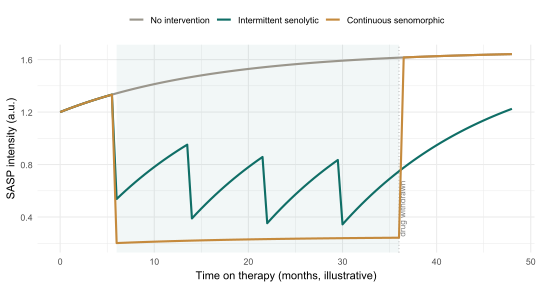
But the senomorphic route carries its own structural penalty, and it is the one the weeding analogy anticipated. Because the cell is spared, the SASP returns the moment the drug is withdrawn — suppression is reversible in a way that subtraction is not — so senomorphics imply chronic, lifelong dosing, with the accumulating toxicity and cost that chronic dosing entails. Worse, the spared cell continues to do everything other than secrete: it occupies space in the tissue, exerts its bystander pressure on neighbours, and contributes to the burden that goes on rising underneath the silenced surface. Figure 7.1 makes the contrast quantitative.

Show the simulation code
library(ggplot2)

dt   <- 0.5
t    <- seq(0, 48, by = dt)
prod <- 0.10            # senescent-cell production (rises slowly with damage)
clr  <- 0.06            # baseline clearance; equilibrium burden = prod/clr

# Baseline burden: cells are never removed (dB/dt = prod - clr*B)
B_base <- numeric(length(t)); B_base[1] <- 1.2
for (i in 2:length(t)) B_base[i] <- B_base[i-1] + (prod - clr*B_base[i-1])*dt

# Senolysis: same dynamics, but burden is knocked down at each pulse
pulses <- c(6, 14, 22, 30)                       # within the treatment window
B_seno <- numeric(length(t)); B_seno[1] <- 1.2
for (i in 2:length(t)) {
  B_seno[i] <- B_seno[i-1] + (prod - clr*B_seno[i-1])*dt
  if (round(t[i], 3) %in% pulses) B_seno[i] <- B_seno[i] * 0.40
}

on <- t >= 6 & t <= 36                           # treatment window (drug withdrawn at 36)

df <- rbind(
  data.frame(t = t, S = B_base,                         regimen = "No intervention"),
  data.frame(t = t, S = B_seno,                         regimen = "Intermittent senolytic"),
  data.frame(t = t, S = ifelse(on, B_base*0.15, B_base), regimen = "Continuous senomorphic")
)
df$regimen <- factor(df$regimen,
  levels = c("No intervention", "Intermittent senolytic", "Continuous senomorphic"))

pal <- c("No intervention"        = "#9A968C",
         "Intermittent senolytic" = "#0F6E66",
         "Continuous senomorphic" = "#C58A3D")

ggplot(df, aes(t, S, colour = regimen)) +
  annotate("rect", xmin = 6, xmax = 36, ymin = -Inf, ymax = Inf,
           fill = "#0F6E66", alpha = 0.05) +
  geom_vline(xintercept = 36, linetype = "dotted", colour = "grey60",
             linewidth = 0.4) +
  annotate("text", x = 36.3, y = 0.25, label = "drug withdrawn",
           angle = 90, hjust = 0, size = 2.9, colour = "grey50") +
  geom_line(linewidth = 1) +
  scale_colour_manual(values = pal) +
  labs(x = "Time on therapy (months, illustrative)",
       y = "SASP intensity (a.u.)", colour = NULL) +
  theme_minimal(base_size = 11) + theme(legend.position = "top")
Figure 7.1: Kill versus silence, simulated. Three regimens act on the same accumulating senescent-cell burden; the curves show the resulting SASP intensity — the quantity that does the harm. Untreated (grey), the signal rises with burden. A continuous senomorphic (ochre) drives the signal to its lowest level of all while dosing, by muting secretion, but achieves this without removing a single cell, so the moment the drug is withdrawn (dotted line) the signal rebounds to its full, undiminished height. An intermittent senolytic (teal) gives coarser, sawtoothed control — the signal climbs back between pulses — yet because each pulse subtracts cells rather than silencing them, the benefit persists into the drug-free interval and the post-withdrawal signal sits below the senomorphic’s. The figure is illustrative, not measured, but it captures the asymmetry at the heart of the chapter: silencing buys the deepest acute relief and no durability; killing buys shallower relief that outlasts the dose.

When, then, should one silence rather than kill? The answer turns on the double-edged biology established in Chapter 4. Senescence is not simply the enemy: transient senescent cells aid wound healing through their secretions (Demaria et al., 2014), programmed senescence sculpts the developing embryo (Muñoz-Espín et al., 2013), and the state suppresses cancer by halting cells at risk of transformation (Table 4.1). Where senescent cells are doing necessary work, or are too heterogeneous to target without collateral loss, the lighter touch of muting the SASP may be safer than wholesale clearance; where they are unambiguously pathological and persistent, subtraction is the cleaner aim. The mature framing of the field, accordingly, is not that one strategy beats the other but that each suits a different tissue, disease and moment — a precision question of which senescent cell, where and when, rather than a contest between killing and silencing (Chaib et al., 2022; Di Micco et al., 2021).

7.6 Kill, silence — or unlock?

Senolytics and senomorphics share a single conceptual frame: both treat the senescent cell as a problem to be removed or quietened. It is a powerful frame, and the most clinically advanced one in this book — but it has a horizon. Subtracting a senescent cell empties the space it occupied; muting it silences the signal it sent. Neither does anything for the far larger population of cells that have not died and are not senescent, but have simply drifted — cells whose epigenome has slid out of its proper valley, carrying them part of the way towards a mesenchymal, identity-poor state without ever arresting (Lu et al., 2025; Yücel & Gladyshev, 2026). Senescence, in the epigenetic reading of Chapter 3, is itself a locked loss of identity; senolysis removes the locked cells but cannot unlock them, and there is no dose of a senomorphic that restores a drifted cell to what it was.

That points beyond removal and suppression to a third and more radical possibility. If ageing is, at bottom, a loss of cellular identity written into the epigenome, then the deepest intervention would neither kill the cell nor mute it but rewind it — reach into the drifted epigenome and restore the pattern of a younger cell. We turn from subtracting damaged cells to rewriting their age: from senolytics to reprogramming.